

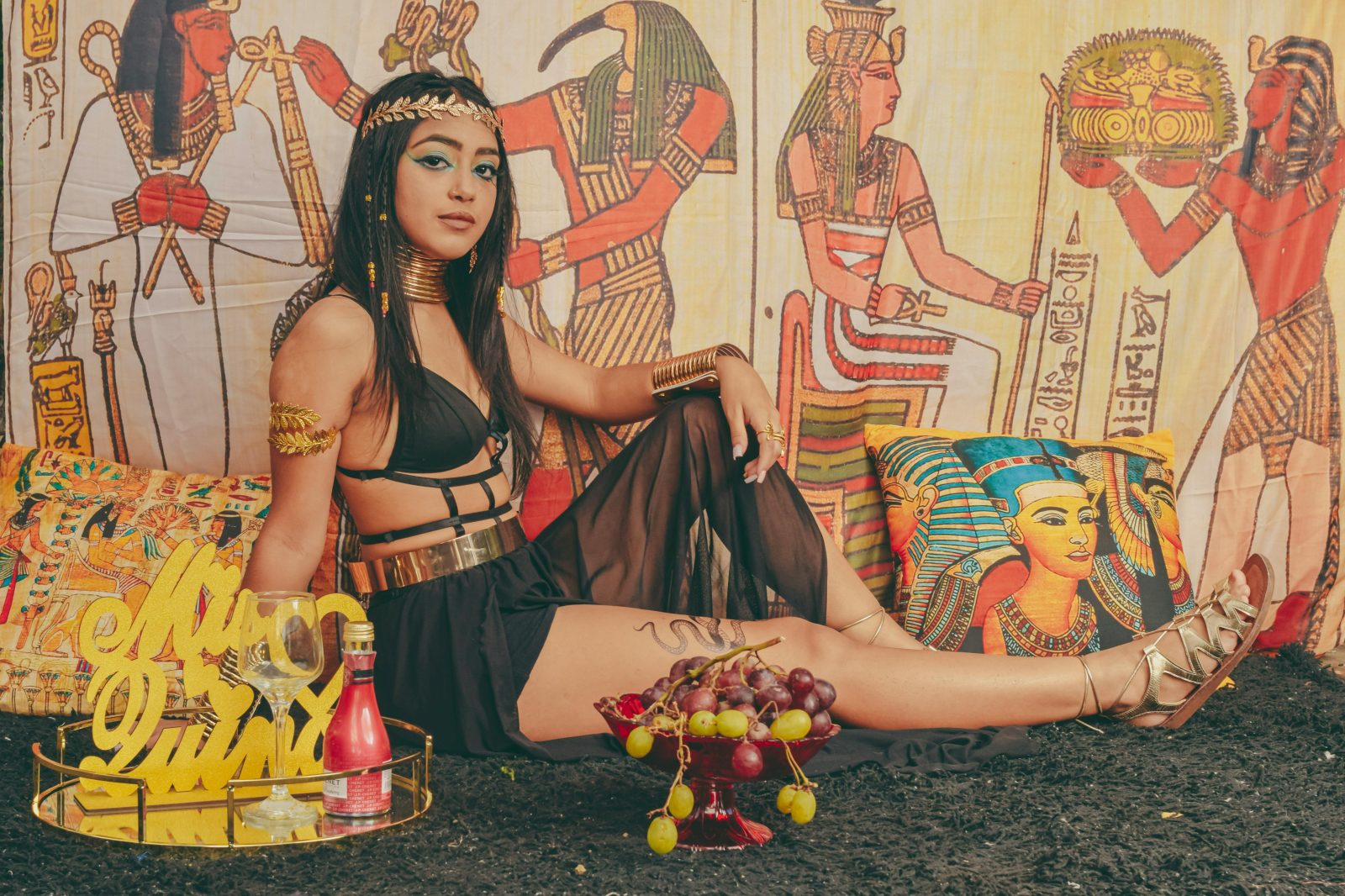

Few civilizations captivate the imagination quite like ancient Egypt. From monumental pyramids to intricate hieroglyphs, their legacy is rich with artistry and profound symbolism. Among their many treasures, ancient Egyptian jewelry stands out as a testament to their sophisticated craftsmanship, deep spiritual beliefs, and an aesthetic that continues to inspire millennia later. Far more than mere adornment, each piece told a story, offered protection, or denoted status.
A Glimpse into the Past: The Significance of Ancient Egyptian Jewelry
For the Egyptians, jewelry was imbued with powerful meaning. It wasn’t just for pharaohs and queens; men, women, and children of all social strata wore it. Materials ranged from precious gold and silver to vibrant gemstones like lapis lazuli, carnelian, and turquoise, often imported from distant lands. Glass and faience were also extensively used, offering a spectrum of brilliant colors.
The designs were steeped in religious and cultural symbolism. Scarabs, representing rebirth and regeneration, were frequently incorporated into rings and pendants. The Eye of Horus, a symbol of protection, royal power, and good health, was a common motif. Ankhs, symbolizing life, were also prevalent, appearing in various forms of adornment. These symbols were believed to offer protection to the wearer in both life and the afterlife.
The Personal Touch: Cartouche Jewelry
One of the most uniquely personal and enduring forms of Egyptian jewelry is the cartouche jewelry. A cartouche is an oval shape with a horizontal line at one end, indicating that the text enclosed within is a royal name. In ancient times, pharaohs and deities had their names inscribed within these protective frames. Today, modern cartouche jewelry offers a beautiful way to connect with this ancient tradition.
A cartouche necklace, for instance, typically features a pendant engraved with one’s name in hieroglyphs. This personal touch makes it a deeply meaningful piece, carrying echoes of the protective amulets worn by Egyptian royalty. Owning a cartouche piece is like wearing a small, wearable artifact, a bridge between your identity and the grandeur of ancient Egypt.
Craftsmanship and Materials
The skill of ancient Egyptian jewelers was extraordinary. They mastered techniques such as granulation, cloisonné, and repoussé, creating intricate details and stunning multi-colored pieces. Gold, especially, was favored due to its incorruptibility and association with the sun god Ra, symbolizing eternity. They believed gold was the flesh of the gods.
The vibrant blues of lapis lazuli, often associated with the heavens and fertility, and the fiery reds of carnelian, symbolizing life and energy, were carefully selected for their aesthetic appeal and symbolic resonance. These materials were not just pretty; they were essential components of the jewelry’s magical and protective properties.
The Modern Revival: Wearing a Piece of History
Today, the fascination with ancient Egyptian jewelry continues unabated. Designers draw inspiration from the timeless motifs, bold colors, and intricate details. Modern interpretations often blend these historical elements with contemporary aesthetics, making pieces that are both historically rich and perfectly suited for today’s fashion.
Whether you’re drawn to the protective symbolism of the Eye of Horus, the promise of rebirth in a scarab, or the deeply personal statement of a cartouche necklace, Egyptian-inspired jewelry offers more than just beauty. It offers a connection to a civilization that understood the power of adornment to convey identity, belief, and an enduring sense of style.





Related Articles
Gothic Rings That Express Your Dark Aesthetic Without Compromising Quality
Find authentic gothic rings crafted from sterling silver and precious metals that...
Why Girls Everywhere are Falling in Love with Acubi Fashion
If you have spent any time scrolling through TikTok, Instagram, or Pinterest...

Acubi Fashion: The Ultimate Guide to the Minimalist Edgy Look
In the fast-moving world of digital trends, fashion cycles seem to refresh...

How to Style Flared Jeans for Any Vibe
If there is one denim silhouette that has truly stood the test...
Leave a comment